Our Korowai – Hōnore 1840
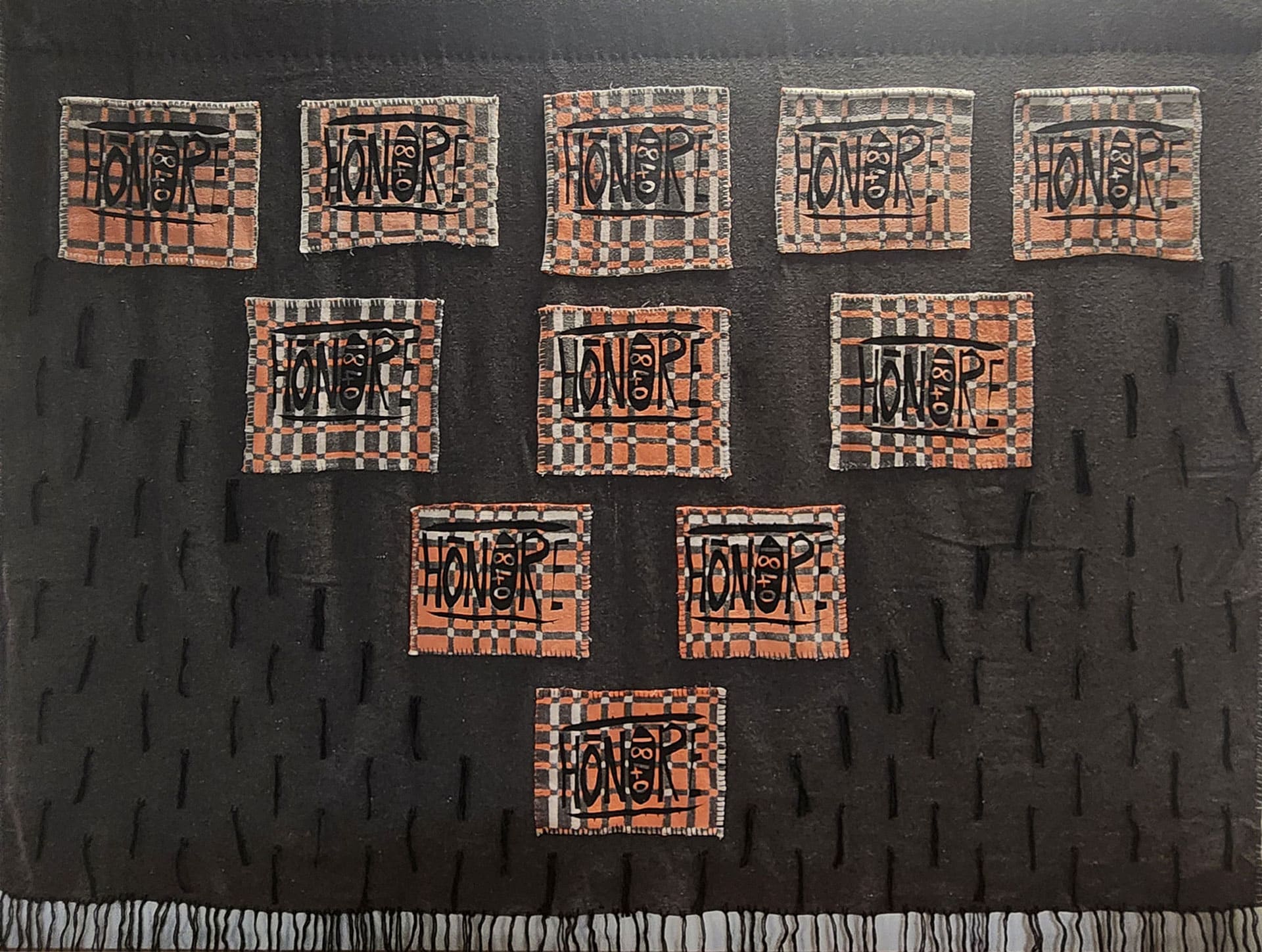
We are creating a korowai (cloak) to express our journey towards a better understanding of how we can honour The Treaty of Waitangi. It’s very important that this visual representation expresses warmth and protection for us all.
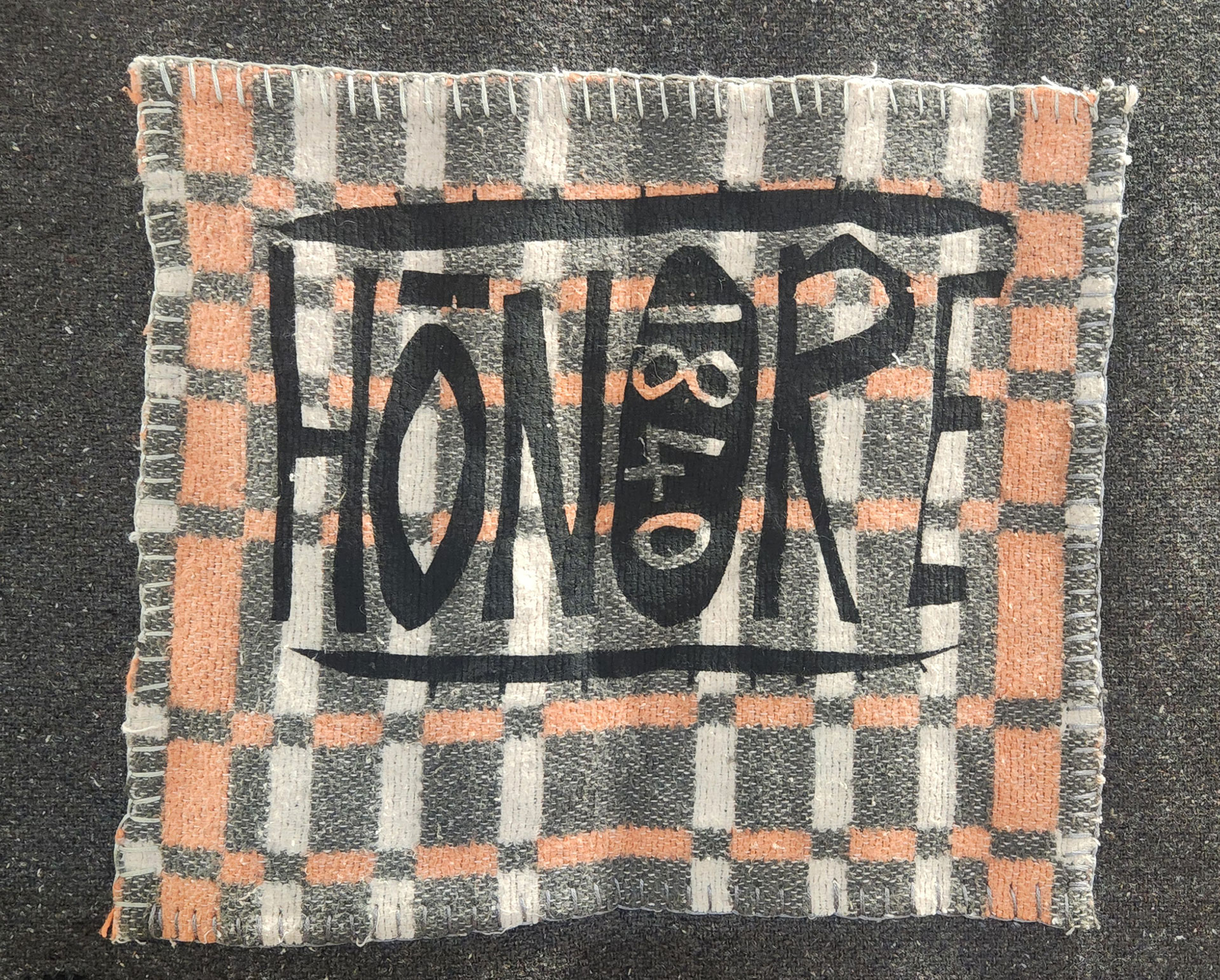
Hōnore Te Tiriti panels – printed on cotton blanket, created by Sandylee Bell and Kara Dodson (from Hilary Foged).
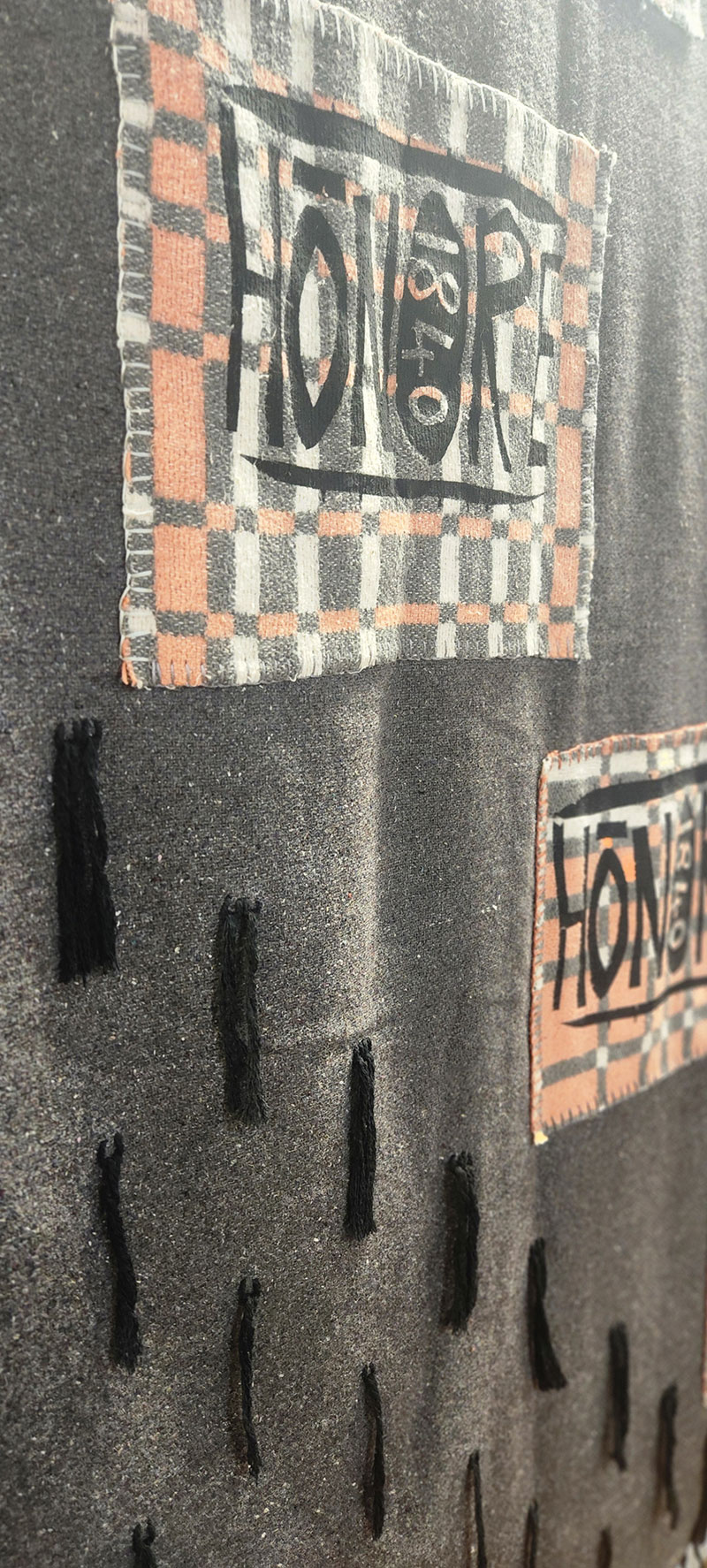
Grey woollen blanket – used and worn, purchased from an op shop. It represents warmth and protection but also references the ‘army blanket’ of colonisation.
Blanket stitching – a traditional stitch that attaches the panels and protects the edges. The different colours of thread represent our different perspectives and experiences. Hukahuka (tassels) stitched by our Rhythms of Grace Community along the bottom edge of our Korowai.
The twisted wool strands represent our personal responses, prayers, struggles, questions and choices, stitched side by side as we journey together.
Inverted triangle design – adds a cloak-like feeling and creates impact for the 11 printed panels. The black colour highlights both the printed messages and the hukahuka.
Our Korowai is a work in progress so, as well as attaching hukahuka (tassels), we plan to include other elements over time.
Hōnore 1840 prints created by Sandylee Bell and Kara Dodson.
Blanket created by Alison Squires with support from Eric Johnston, Hilary Foged, and Sheryl Madden.
Korowai – Cloaks
Kākahu (the Māori word for clothing) was also the general word used for cloaks. However, the most-commonly used word is now Korowai. Cloaks are worn for adornment as well as for warmth and protection from the elements. Māori often incorporated modern materials such as wool into traditional hand-woven muka (flax fibre) garments for extra colour, decoration, or warmth.
Māori use different words to describe different types of cloaks depending on the materials used, the cloak’s purpose and the design.
Korowai is a specific type of muka (flax fibre) cloak with hukahuka adornment or tassels. It can also feature feathers and tāniko (traditional designs or patterns), but unless it features hukahuka it is not a korowai.
Kākahu usually describes a full feather cloak.
Pake [rain cloaks] – woven with durable dried leaves.
Kahi koati – woven with goat hair.
Kahu huruhuru – woven with full feather coverage.
Kahu kiwi – with full kiwi feather coverage.
Kaitaka – a fine muka cloak with tāniko borders (traditional woven patterns).
Muka (flax fibre) is made from flax (Phormium tenax) which grows in swampy or low-lying areas around New Zealand. The fibre is made by stripping the outer green layer of flax leaf using a shell (often a mussel shell). The remaining fibre is then washed and pounded with a muka patu (blunt stone or wood club) to leave a fibrous thread that is silky and soft to touch. The thread is then bound together into a sturdy chord and sometimes dyed before weaving.
https://blog.tepapa.govt.nz/2018/04/30/maori-kakahu-cloaks-when-is-a-korowai-not-a-korowai/